 Image 1 of 4
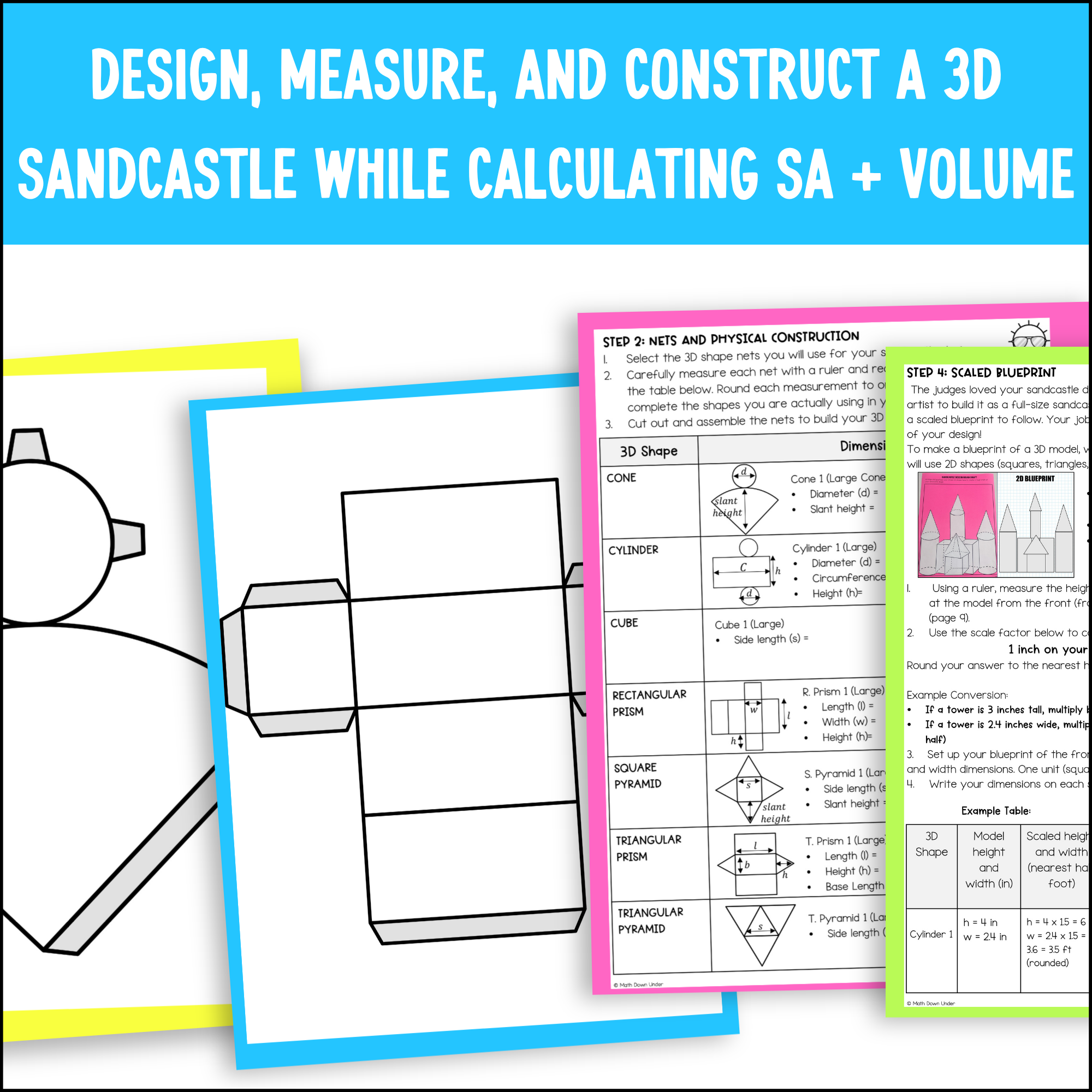 Image 2 of 4
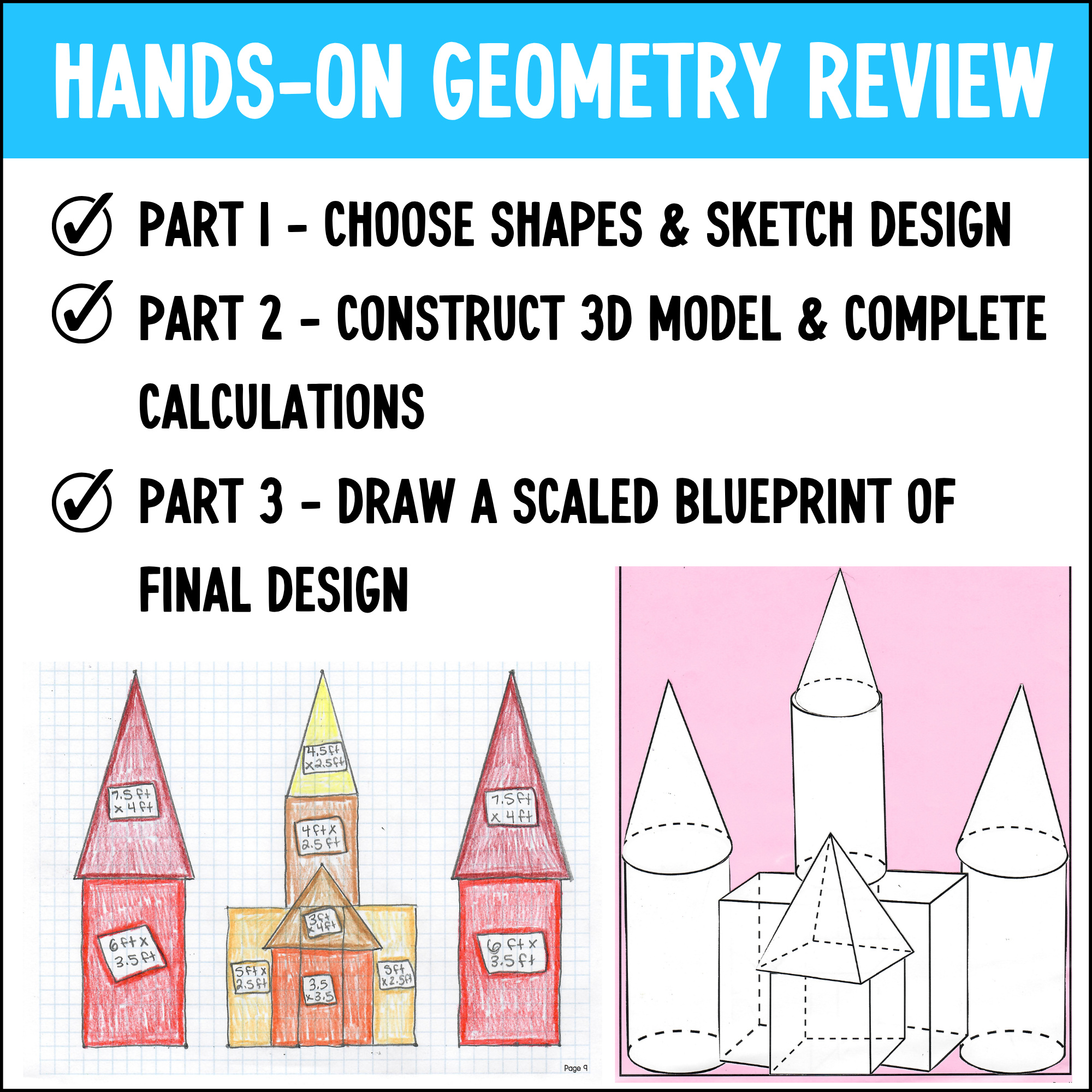 Image 3 of 4
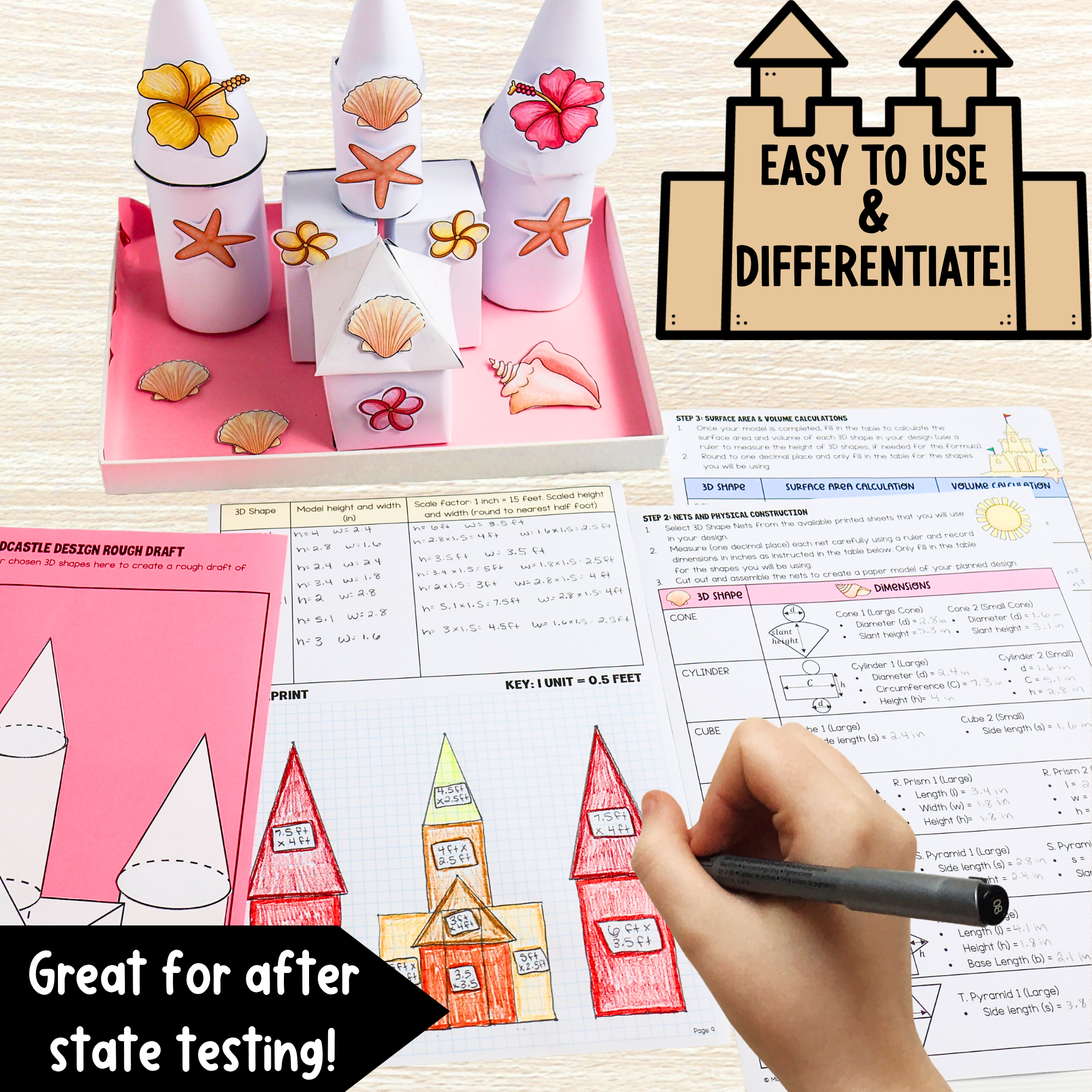 Image 4 of 4
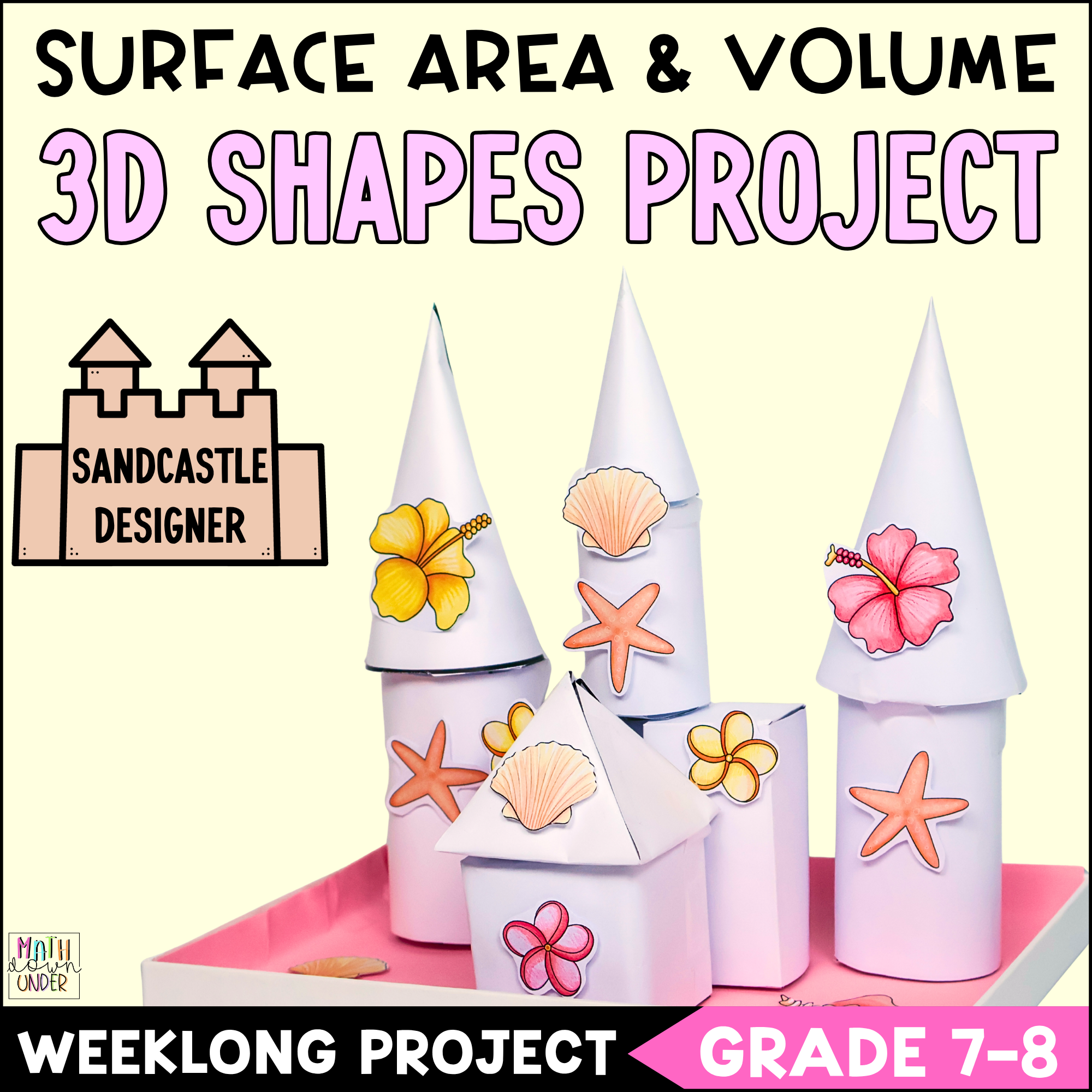
Make surface area and volume fun with this end of year project for 7th grade and 8th grade!
This Surface Area and Volume Sandcastle Design Project gives middle school students an engaging way to apply geometry skills through building, measuring, calculating, and designing. Students create a sandcastle model using 3D shape nets, calculate the surface area and volume of their shapes, and finish by drawing a scaled blueprint of their final design. This printable geometry project is a creative and meaningful way to review 3D shapes, nets, measurement, surface area, volume, and scale drawings.
Finding an activity after state testing that actually covers curriculum AND keeps students genuinely engaged is tough. This project solves that problem by combining hands-on model building with rigorous geometry calculations — students are so excited about building their sandcastle that they don't even realize how much math they're doing!
Here's what you'll get (35+ pages):
● Teacher instruction guide with 7-day lesson breakdown and differentiation ideas
● Student worksheet packet
● Printable 3D shape nets in large and small sizes — rectangular prism, cone, cylinder, cube, square pyramid, triangular pyramid, and triangular prism
● Decorative clipart sheets for students to customize their models
● Grading rubric
● Full answer key with worked examples (note: student answers will vary based on measurements)
Skills and topics covered:
● Surface area calculations for 7 different 3D shapes
● Volume calculations for 7 different 3D shapes
● Scale factor and proportional reasoning
● 2D blueprint drawing from a 3D model
How to use this resource:
This project is designed for 7 lessons, but is easy to shorten or modify. Run it as a full individual project, assign it as group work to reduce the time commitment, or omit the scaled blueprint section to trim it to 5–6 days. It works beautifully as a performance task at the end of a surface area and volume unit, as an activity at the end of the year, or as a creative alternative assessment.
Make surface area and volume fun with this end of year project for 7th grade and 8th grade!
This Surface Area and Volume Sandcastle Design Project gives middle school students an engaging way to apply geometry skills through building, measuring, calculating, and designing. Students create a sandcastle model using 3D shape nets, calculate the surface area and volume of their shapes, and finish by drawing a scaled blueprint of their final design. This printable geometry project is a creative and meaningful way to review 3D shapes, nets, measurement, surface area, volume, and scale drawings.
Finding an activity after state testing that actually covers curriculum AND keeps students genuinely engaged is tough. This project solves that problem by combining hands-on model building with rigorous geometry calculations — students are so excited about building their sandcastle that they don't even realize how much math they're doing!
Here's what you'll get (35+ pages):
● Teacher instruction guide with 7-day lesson breakdown and differentiation ideas
● Student worksheet packet
● Printable 3D shape nets in large and small sizes — rectangular prism, cone, cylinder, cube, square pyramid, triangular pyramid, and triangular prism
● Decorative clipart sheets for students to customize their models
● Grading rubric
● Full answer key with worked examples (note: student answers will vary based on measurements)
Skills and topics covered:
● Surface area calculations for 7 different 3D shapes
● Volume calculations for 7 different 3D shapes
● Scale factor and proportional reasoning
● 2D blueprint drawing from a 3D model
How to use this resource:
This project is designed for 7 lessons, but is easy to shorten or modify. Run it as a full individual project, assign it as group work to reduce the time commitment, or omit the scaled blueprint section to trim it to 5–6 days. It works beautifully as a performance task at the end of a surface area and volume unit, as an activity at the end of the year, or as a creative alternative assessment.