Why Number Talks Make Better Middle School Math Warm-Ups
The First 5 Minutes of Math Class Are Slipping Away (Here's How to Get Them Back)
Most math teachers want two things from the start of class… a routine that settles students quickly, and time for the kind of critical, collaborative thinking that number talks build.
The solution: make number talks the warm-up routine. A visual prompt is on the board the moment students walk in. Because the prompts are genuinely interesting, and not another question-and-answer worksheet, most students want to get to work right away.
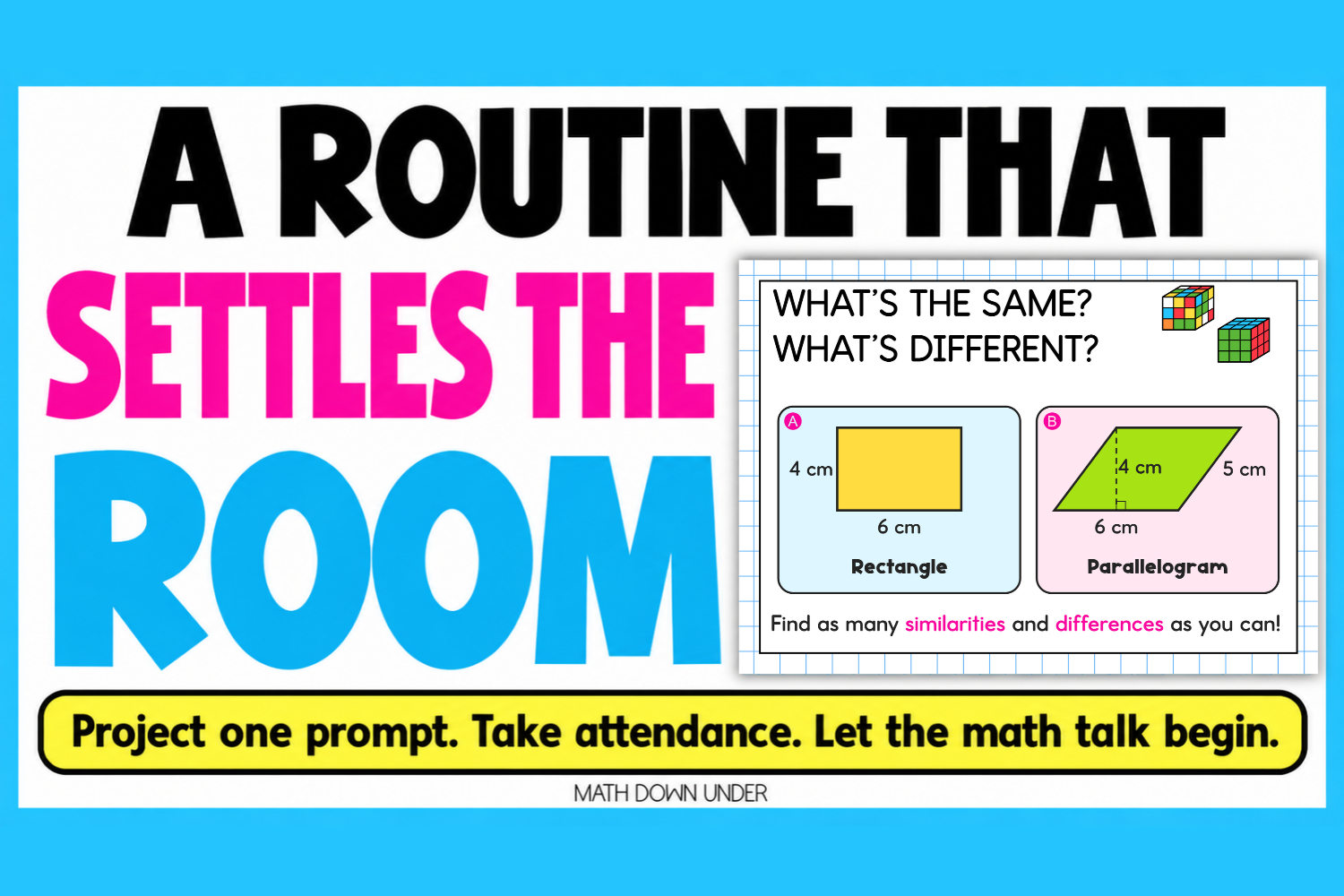
A number talk goes on the board as students walk in. There’s nothing to hand out and nothing to explain. Students look at a picture, a set of numbers, or a short prompt and start thinking right away.
That gives teachers five to ten minutes to take attendance and check in with a student who was absent … while the class is already doing math. A predictable routine also cuts down on the “what are we doing today?” questions, because students know exactly what to expect!
Built-in differentiation: every student has a way in
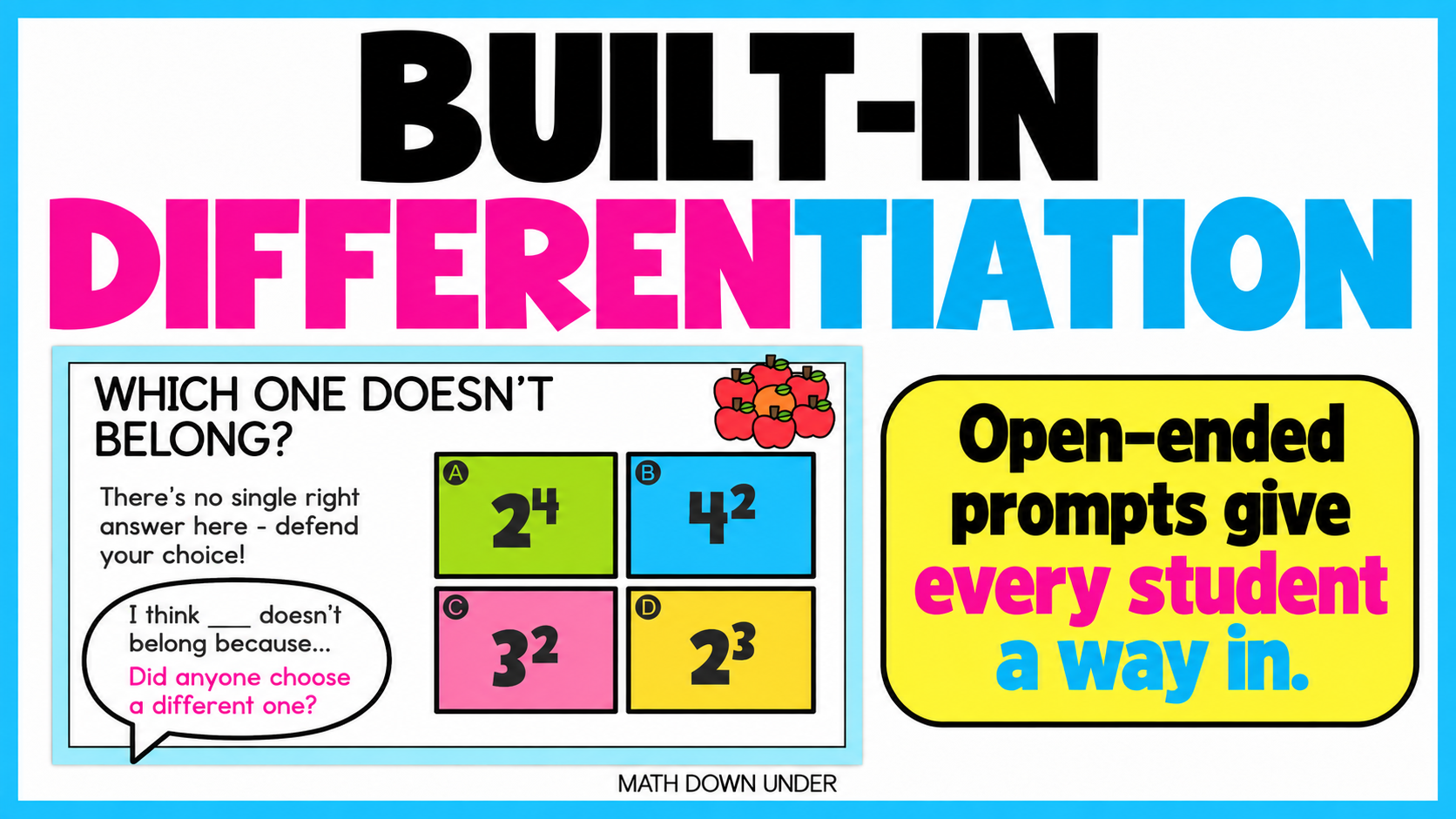
Open-ended prompts makes math accessible to every student in the room.
Most warm-ups have one right answer. The students who get it fast are done in thirty seconds, and the students who don’t just wait.
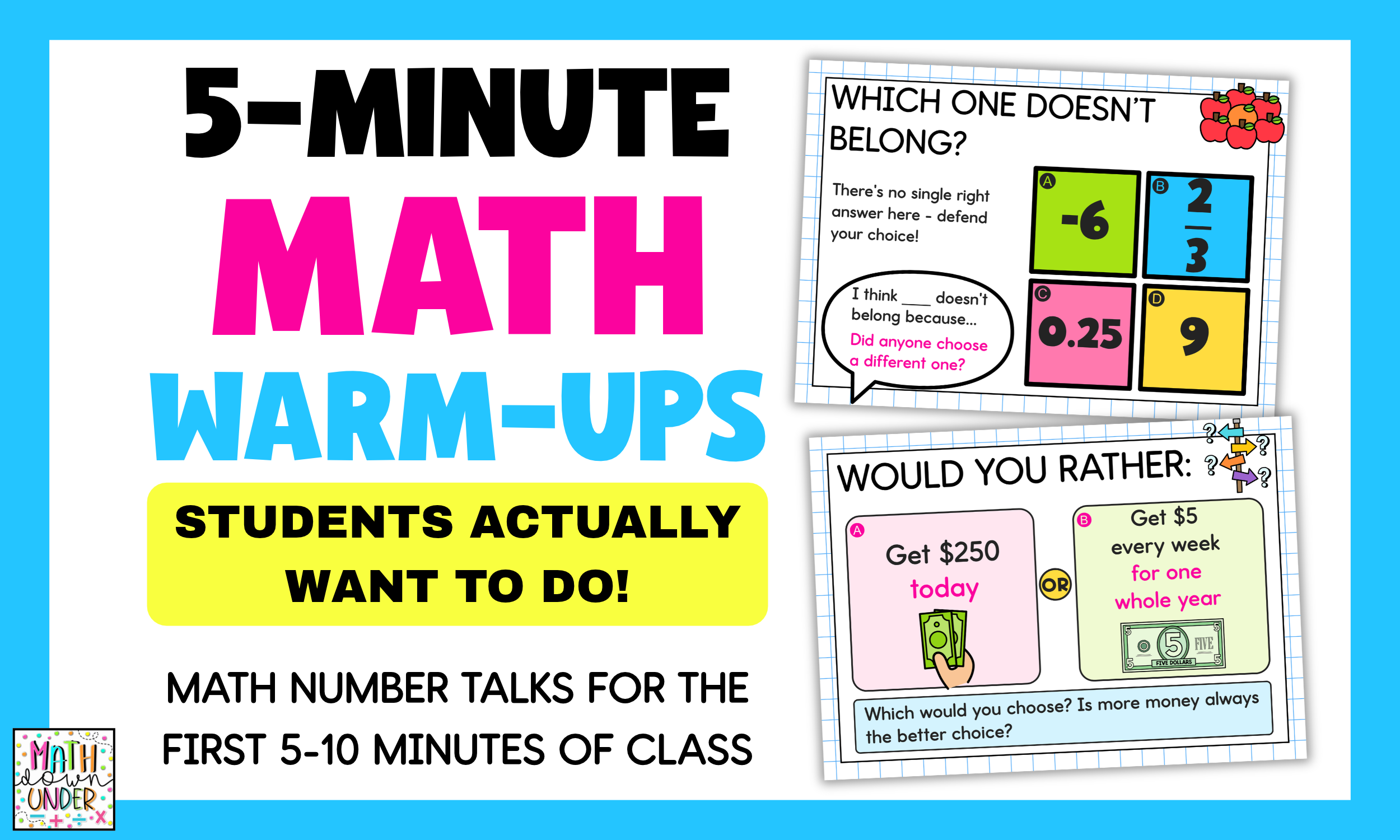
Number talks work differently. Prompts like Which One Doesn’t Belong? and What’s the Same? What’s Different? have more than one correct answer, as long as students can justify it. A student who struggles with fractions can still notice that one number is the only negative. A student who is ahead can look for a less obvious reason. Everyone has something to contribute, which makes it easier for quieter students to speak up.
That is differentiation built right into the routine. The same prompt works for the whole class, with no separate versions to prepare, and it makes math accessible to every student in the room.
Collaboration and math vocabulary, every day
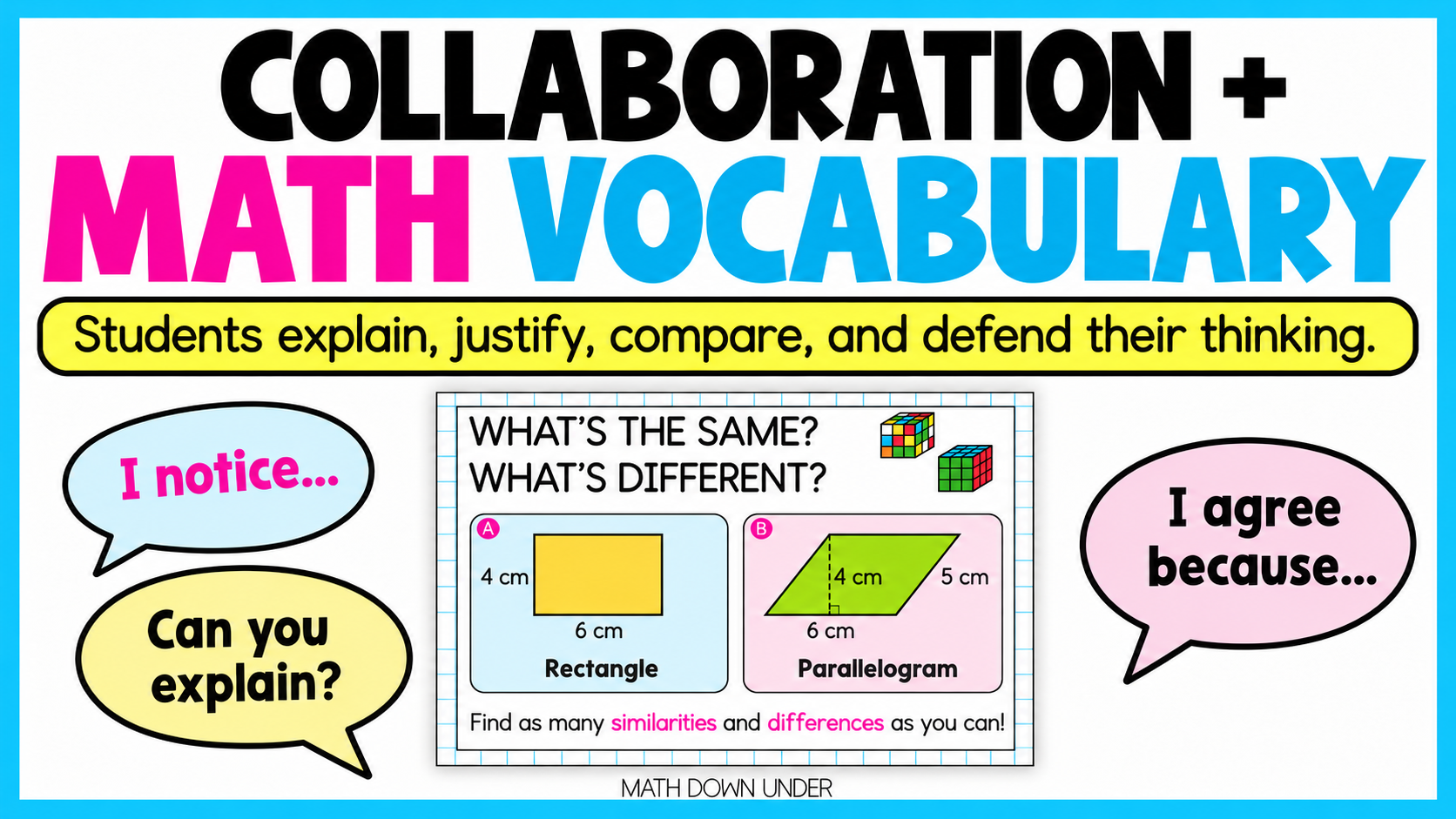
The real value of a number talk is the conversation after the thinking. Students explain their reasoning, listen to a classmate who saw it differently, and decide whether they agree.
That is collaboration and mathematical reasoning in one short routine. Asking “How do you know?” and “Did anyone see it another way?” every day builds the habit of justifying answers, which carries over into the rest of the lesson, into tests, and into group work. It also gives teachers a quick read on misconceptions before the lesson even begins.
Number talks also reinforce math vocabulary. To explain their thinking, students need words like integer, equivalent, ratio, supplementary, and median. They hear classmates use those words correctly, in context, every day. Vocabulary used out loud sticks far better than vocabulary copied from a word wall!
The first five minutes of math class don’t have to be lost time. With the right prompt on the board, they become the calmest and most talkative part of the lesson.
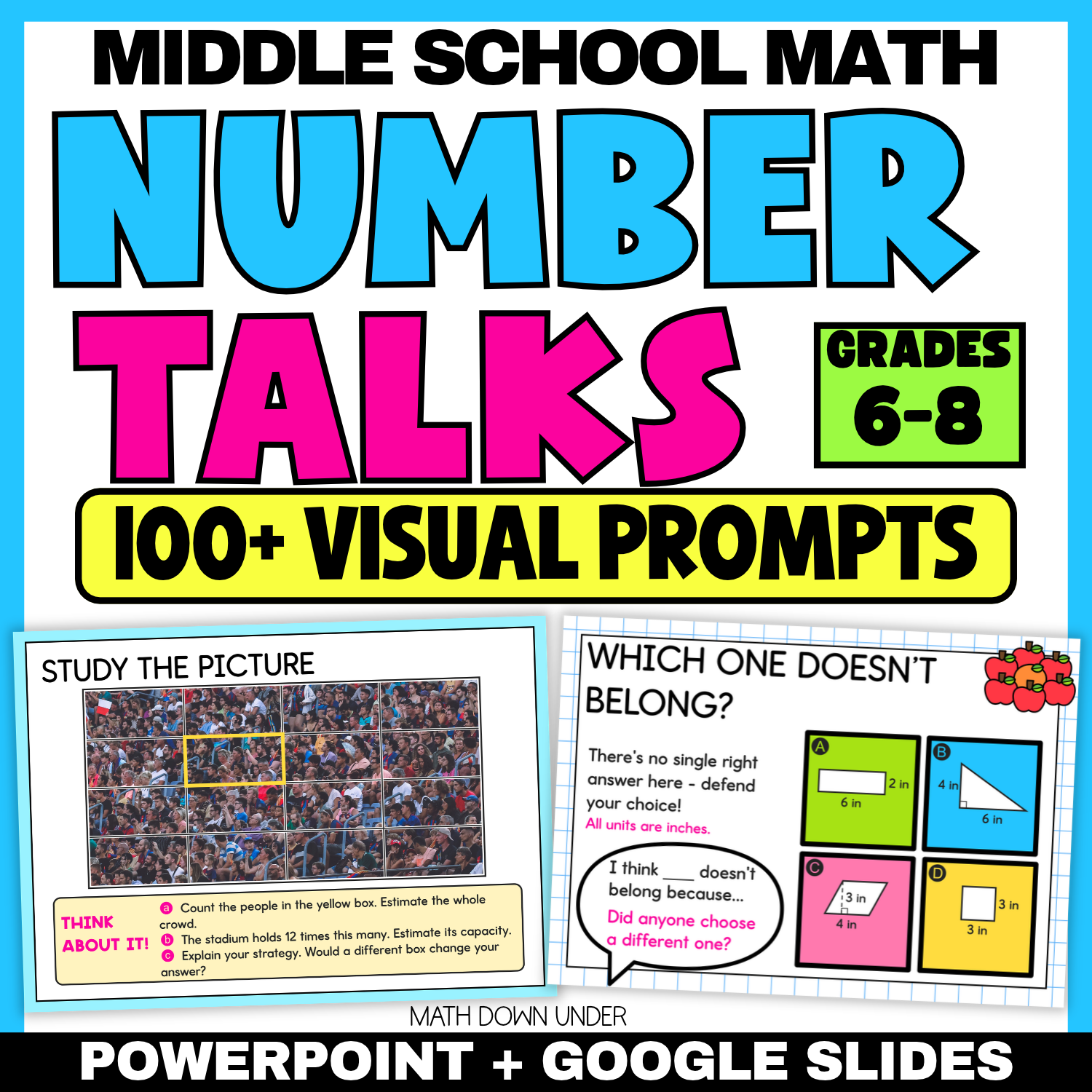
Middle School Math Number Talks
100 ready-to-project slides, covering the routines students enjoy most:
• Which One Doesn’t Belong?
• Two Truths & a Lie
• Would You Rather?
• Find the Mistake
• Always, Sometimes, Never
• What’s the Same? What’s Different?
• Mystery Number, Picture This!, and more
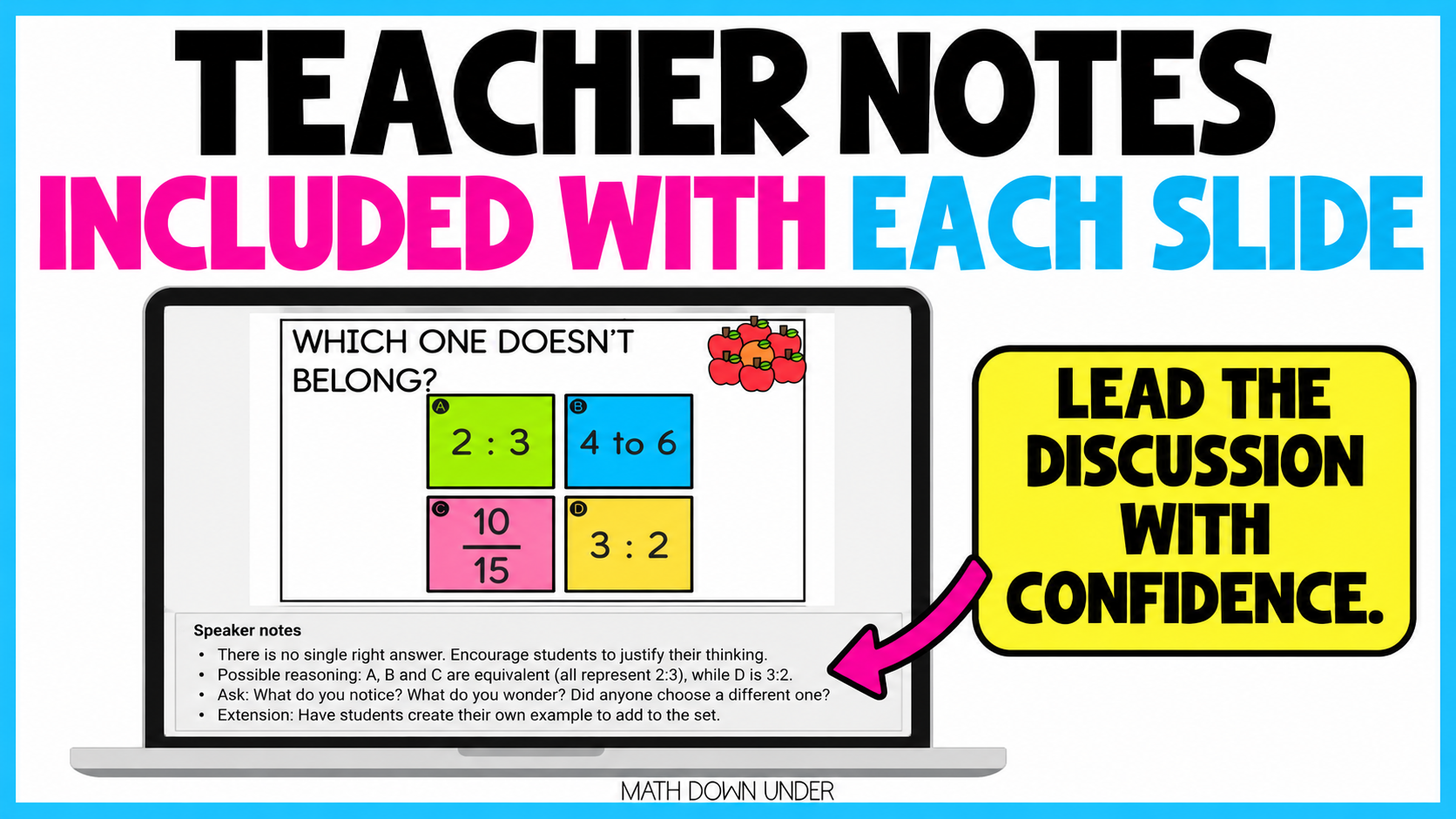
Every slide includes speaker notes with answers, possible student responses, and follow-up questions, so there is no prep and no guessing. Project one slide each day and let students take it from there.
Get the Middle School Math Number Talks resource on TPT → HERE